
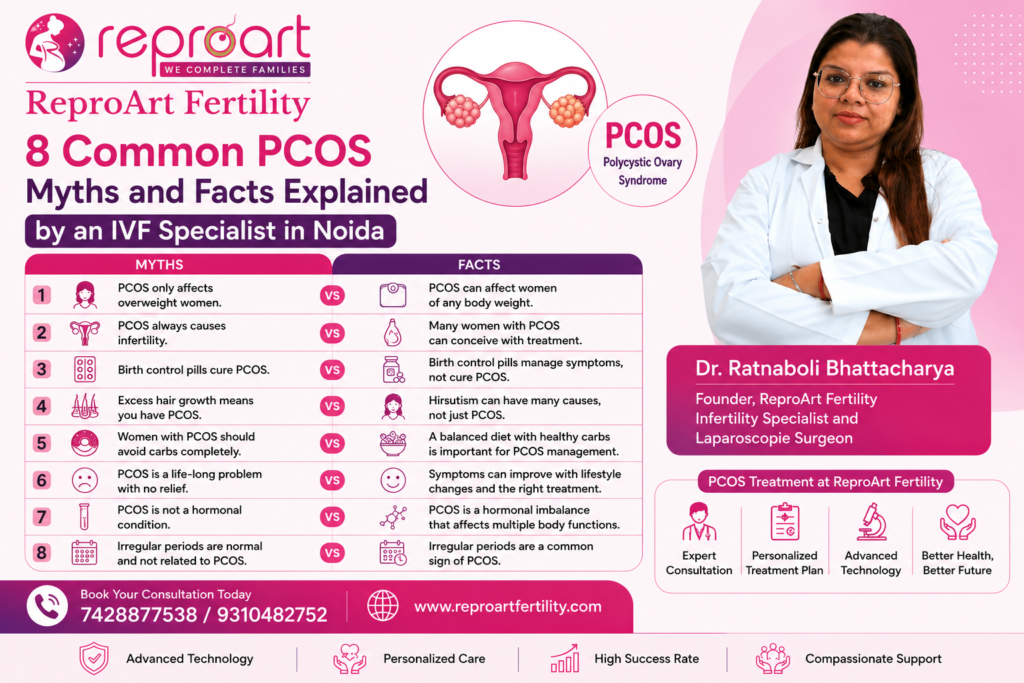
Did you know 1 in 10 women of childbearing age suffer from Polycystic ovary syndrome (PCOS), also known as polycystic ovarian syndrome? This common health condition disrupts the balance of reproductive hormones. Often leading to irregular periods, cyst formation, and fertility challenges.
While PCOS can make conception more challenging, it does not mean pregnancy is impossible. With the right guidance, many women successfully navigate this journey. Consulting an IVF Specialist in Noida can help you understand your condition better, separate myths from facts, and explore the most suitable fertility options with confidence.
Understanding PCOS and Its Impact on Fertility
If you have PCOS, your ovaries may produce higher levels of androgens, often referred to as ‘male hormones,’ which disrupt the balance of reproductive hormones. This hormonal imbalance can lead to irregular menstrual cycles, missed periods, excessive hair growth (hirsutism), and irregular or absent ovulation—one of the leading causes of infertility in women.
In many cases, small fluid-filled sacs, known as cysts, develop along the outer edges of the ovaries. These cysts contain immature eggs, or follicles, which often fail to mature and release regularly. PCOS is also closely linked to insulin resistance, a condition that affects how your body processes blood sugar and further contributes to hormonal imbalance.
But does irregular ovulation mean you can’t get pregnant? Absolutely not. With the right medical support, PCOS can be effectively managed, and many women go on to conceive successfully. Consulting an IVF Centre in Noida can help you understand your ovulation patterns, explore suitable treatment options, and improve your chances of pregnancy. It’s important to remember that an IVF specialist is, first and foremost, a fertility expert—IVF is just one of several treatment approaches, recommended only when necessary.
Myth 1: PCOS Means You Can Never Get Pregnant
Fact: PCOS can make conception challenging due to irregular ovulation. But it doesn’t mean pregnancy is impossible. Consult the IVF specialist in Noida to get the right treatment and guidance, many women with PCOS go on to have healthy pregnancies. Book your appointment today to help you find the path that works best for you.
Myth 2: Only Overweight Women Get PCOS
Fact: PCOS does not directly cause weight gain in women or make weight loss impossible. But when left untreated, it may lead to a higher BMI, which can worsen symptoms; lifestyle changes can be effective. Even a modest weight loss can improve symptoms and support fertility in women. For personalized guidance, consult a fertility specialist today.
Myth 3: Irregular Periods Are Normal with PCOS
Fact: Irregular periods are common in women and do not always indicate PCOS. A normal menstrual cycle ranges between 21 to 35 days, but factors like stress, weight changes, or lifestyle shifts can cause temporary irregularities. However, in some cases, hormonal imbalance associated with PCOS can disrupt ovulation, leading to missed or unpredictable cycles. Since irregular periods are just one symptom, proper diagnosis is essential. If concerns persist, consulting an IVF specialist in Noida can help assess fertility in women and identify the right treatment approach.
Myth 4: PCOS Is Just a Fertility Issue
Fact: PCOS is linked to fertility challenges, but it does not mean pregnancy is impossible. In many women, the condition affects ovulation, leading to irregular or absent egg release. This can often be managed with ovulation-inducing medications or by addressing insulin resistance. With the right treatment approach, many women are able to conceive successfully, and advanced options are considered only when necessary.
Myth 5: You Need IVF Immediately If You Have PCOS
Fact: Not every woman with PCOS requires IVF as the first step. In many cases, simpler treatments such as ovulation-inducing medications or lifestyle changes can successfully restore ovulation and improve fertility in women. IVF is typically recommended only when these initial approaches do not work or when additional fertility factors are involved.
A personalised treatment plan is essential, ensuring that women receive the most appropriate and least invasive option before considering advanced procedures.
Myth 6: Birth Control Pills Cure PCOS
Fact: Birth control pills do not cure PCOS—they help manage its symptoms. These medications are commonly used to regulate menstrual cycles, reduce acne, and control excess hair growth by balancing hormones.
However, PCOS is a long-term hormonal condition with no definitive cure. While pills can improve visible symptoms, they do not address the underlying causes, such as insulin resistance. A comprehensive, personalised approach is essential for effectively managing symptoms and improving overall reproductive health in women.
Myth 7: PCOS Symptoms Are the Same for Everyone
Fact: PCOS symptoms vary among women, with some experiencing irregular periods, acne, or excess hair, while others have milder or different signs. This variability can delay diagnosis or cause confusion. A personalized approach is essential for effective symptom management and supporting fertility.
Myth 8: Lifestyle Changes Don’t Make a Difference
Fact: Lifestyle choices play a significant role in fertility in women and overall reproductive health. Factors such as diet, weight, physical activity, stress, and habits like smoking or alcohol consumption can directly impact ovulation and hormone balance. Research shows that even small changes—like maintaining a healthy weight or reducing stress—can improve ovulation and increase the chances of conception. Adopting consistent, healthy habits can positively influence fertility outcomes and support long-term reproductive well-being.
When Should You Consult an IVF Specialist in Noida?
An IVF specialist in Noida combines clinical expertise, ethical practice, and patient-focused care to manage PCOS effectively. By following updated guidelines, addressing metabolic health, and using safe treatment protocols, they improve fertility in women while ensuring accurate diagnosis, personalised care, and better reproductive outcomes.
Managing PCOS with the Right Support
Managing PCOS requires a personalised, long-term approach focused on hormonal balance, metabolic health, and emotional well-being. With the right guidance from an IVF Doctor in Noida, women can improve fertility outcomes, manage symptoms effectively, and move forward with greater confidence on their reproductive journey.