


682 Practo Reviews
175 Google Reviews
15 Lybrate Votes

REPROART FERTILITY

IUI | IVF | ICSI | LASER HATCHING | BLASTOCYST HYSTEROSCOPY | LAPAROSCOPY | DONOR SERVICES

Make an appointment


    Welcome To

    ReproArt Fertility - Advanced Fertility Center

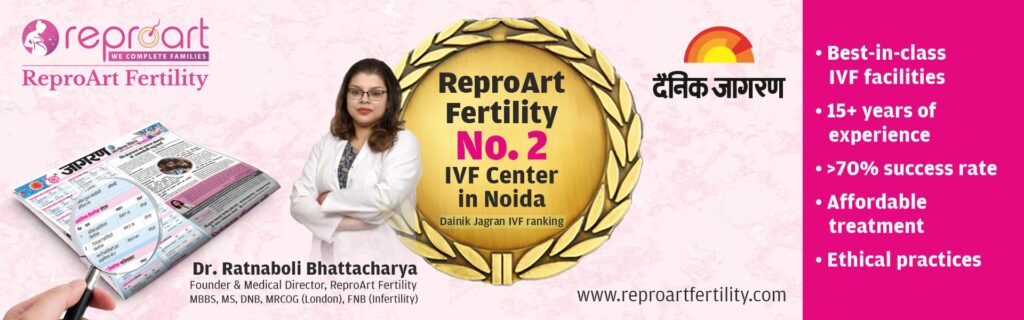
    ReproArt Fertility clinic is a leading IVF service provider. ReproArt Fertility was founded by Dr Ratnaboli Bhattacharya, a leading IVF fertility specialist with experience in more than 1500+ IVF cycles in the past 12 years and is associated with some of the leading IVF chains in the country. She specializes in IVF, ICSI, and IUI and has helped many childless couples to fulfill their dreams. At ReproArt, advanced fertility center, we offer individualized, effective, and affordable infertility treatment to Indian and International couples. We are specialized in cutting-edge IVF treatments such as IVF, IUI, ICSI, Laser Hatching, Laparoscopy, Blastocyst, Donor cycles etc. With state-of-the-art infrastructure, our fertility clinic offers the most top-notch care to our patients. Our team of doctors and nurses will leave no stone unturned in making your experience as smooth as possible.For advanced Fertility center and care contact with ReproArt Fertility.
    Your Path to Parenthood

    Discover hope, embrace joy, and embark on your journey to parenthood with ReproArt Fertility, the premier Advanced IVF & Fertility Centre dedicated to transforming dreams into reality. Our state-of-the-art facilities and compassionate experts are here to guide you every step of the way.

    Expertise Beyond Compare

    At ReproArt Fertility, our commitment to excellence is embodied by our team of renowned fertility specialists. Led by the Advanced IVF & Fertility Centre, our experts bring unparalleled expertise and a passion for helping you overcome infertility challenges. As the leading infertility expert in Noida and Ghaziabad, we understand the unique needs of every individual or couple, tailoring our approach to ensure the highest chances of success.

    Cutting-Edge Technology

    Step into the future of fertility care with ReproArt Fertility, an fertility center in Ghaziabad equipped with the latest technological innovations. Our commitment to staying at the forefront of reproductive medicine ensures that you receive the most effective and personalized treatments available. Your journey to parenthood begins with us.

    Comprehensive Care

    As the go-to Advanced IVF & Fertility Centre, ReproArt Fertility offers a comprehensive range of services designed to address various fertility challenges. Our multidisciplinary approach, coupled with the latest advancements in reproductive medicine, sets us apart as the preferred fertility clinic in the region. Trust us to be your partner in building the family you've always dreamed of.

    Empathy and Support

    Infertility can be a challenging road, but at ReproArt Fertility, you are never alone. Our dedicated team of professionals is committed to providing not just medical expertise but also emotional support throughout your fertility journey. Discover a nurturing environment where your dreams are understood, respected, and actively pursued.

    Embark on Your Journey Today

    Choosing ReproArt Fertility means choosing a brighter, more hopeful future. Take the first step towards parenthood with the fertility clinic that cares. Contact us to schedule your consultation with the leading infertility specialist and let ReproArt Fertility be your partner on the path to creating your family.

    OUR FACILITIES

    Ultrasonography Machine

    Dedicated high resolution Ultrasonography machine for follicular monitoring

    IUI Room

    Dedicated IUI room

    Sperm Collection Facility

    Sperm collection and processing facility

    Modern Equipments

    Equipped with modern equipments like Laminar air flow, Centrifuge machine, Incubators, and Microscope

    In an emergency? Need help?

    Our goal is to provide best and affodable infertility services to our patients.

    Our Services
    Intrauterine Insemination (IUI)

    A fertility treatment that places sperm directly into the uterus.

    Read More

    In Vitro Fertilization (IVF)

    Advanced assisted reproductive technology for successful conception.

    Read More

    Intracytoplasmic Sperm Injection (ICSI)

    Specialized IVF procedure for male infertility treatment.

    Read More

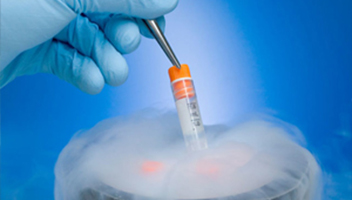
    Embryo Cryopreservation

    Preserve embryos safely for future fertility treatments.

    Read More

    Donor Surrogacy Cycles

    Donor Surrogacy Cycles

    Read More

    Fertility Preservation

    Fertility Preservation

    Read More

    Blastocyst Culture

    Blastocyst Culture

    Read More

    Fertility Enhancing Endoscopic Surgery

    Fertility Enhancing Endoscopic Surgery

    Read More

    OUR PATIENTS REVEIWS

    Archana Gupta

    Dr. Ratnaboli Bhattacharya is seriously a blessing. She treated me really well and delivered the baby safely. I would say doctor Ratnaboli is God sent, so kind and generous. Treatments and medicines were very effective.

    Huma Hasan

    I would like to thank Dr. Ratna Boli for bringing happiness in our lives. She is very patient, soft spoken and supportive during the procedure. I would recommend her to all those couples who have a difficulty in planning babies. 

    Ishita Dhamma

    Dr. Ratnaboli very supporting, helping. She supporting me during my pregnancy when covid spread everywhere she supporting me over the phone calls nd watsup. Thank you so much mam you gave me lifetime wonderful moment.

    Shailendra Pratap Singh

    Dr. Ratna boli Bhattacharya is the best option to have any IVF (infertility) treatment with 100% positive result..my relatives person conceived in first attempt of IVF with the help of Dr. Ratnaboli Bhattacharya ma’am and other staff…. All the staff members are so cooperative and treat uh like a family member. A lot of thanks ma’am.

    Saumya Awasthi

    She is my wonder woman❤️she made me believe that miracles do happen she is not just a doctor to her patients but their guardian too that personal involvement that she has with her patients is the most commendable and relieving factor in the ages like these where patients are just seen as sources of minting money.

    Siddhant Verma

    Dr. Ratnaboli Bhattacharya is incredible. Not only has she taken great care of our treatment, but also she is lovely to speak with at every appointment and she really took her time to explain our conditions with us as well as our treatment options. It’s rare to find a doctor that combines such care for a patient as a person 

    OUR EXPERIENCE

    150+ Man-Months Experience

    80%+ Success Rate

    1,500+ IVF Cycles

    800+ IUI Cycles

    18 Publications

    6 Awards

    FAQ

    1.When should I opt for IVF?

    IVF may be a possibility for you if you or your partner have any of the following:

    • Low sperm count or abnormalities in sperm quality
    • Issues with ovulation due to ailments like polycystic ovarian syndrome premature ovarian insufficiency
    • Issues involving the fallopian tubes.
    • If any of you have had sterilization.
    • Issues related to endometriosis.
    • A desire to protect your offspring from inheriting genetic diseases.
    • Repeated abortions

    Using donor sperm or eggs is a choice that some people make. For instance, a couple might be advised to use donor sperm or donor eggs if they run the risk of passing on a major genetic condition to their offspring.
    Before beginning cancer treatment, individuals with cancer may occasionally have their healthy eggs or sperm frozen, which can negatively impact their fertility. Later on in life, they can have a baby through IVF by using these gametes.

    2. What are the causes of Male Infertility?

    Nearly one in seven couples are infertile. Up to half of these couples are affected to some extent by male infertility.
    Low sperm production, poor sperm function, or obstructions that limit sperm delivery can all contribute to male infertility. Male infertility may be brought on by illnesses, accidents, chronic health issues, lifestyle choices, viral fevers, hormonal imbalances, male sterilisation and other circumstances.
    Male infertility is a condition that can be stressful and distressing, but there are several options available:

    • IVF
    • IUI
    • Sperm Donation

    Talk to an expert doctor at ReproArt Fertility for assisted and individualized support on fertility treatment options.

    3. What are the causes of Female Infertility?
    • The majority of instances of infertility are caused by sporadic or nonexistent ovulation. Ovulation difficulties can result from issues with the ovary, the pituitary gland, or the brain, which regulates reproductive hormones.
    • Ovulation is impacted by the hormonal imbalance brought on by PCOS. PCOS is linked to insulin resistance, obesity, abnormal body or facial hair development, and acne. It is the most frequent reason for infertility in women.
    • Low AMH is also a very common cause of female infertility. Low AMH means a poor ovarian reserve of premature ovarian insufficiency which can in turn lead to very less number of eggs in the ovary as well as a compromise in the egg quality
    • Prolactin can be produced in excess by the pituitary gland (hyperprolactinemia), which inhibits the production of estrogen and may result in infertility. The medicines you’re taking for a different ailment may possibly be the cause of this.
    • Fallopian tubes that are damaged or clogged prevent sperm from reaching the egg or prevent the fertilized egg from entering the uterus.
    • When tissue that normally develops in the uterus implants and expands in other areas, endometriosis results. The surgical excision of this excess tissue growth may result in scarring, which may obstruct fallopian tubes and prevent the union of an egg and sperm. Additionally, endometriosis can prevent a fertilized egg from implanting properly. The illness also appears to harm sperm or eggs, which would have an impact on fertility.
    • Endometriosis of the ovary also forms chocolate cysts which have an impact on the quality of eggs
    • Certain uterine factors including growths inside the uterus like polyps and fibroids, Chronic infections like
    4. What diet plan do I need to have to avoid Infertility?

    A “fertility diet” typically follows the following principles:

    • Monounsaturated fat is preferred over trans fat (from foods such as avocados and olive oil).
    • More plant protein and less animal protein.
    • More foods high in fiber and low glycemic carbohydrates are needed (including whole grains).
    • Fewer meat sources and more vegetarian sources of iron.
    • Multivitamins specially Vitamin D, Vitamin C and Vitamin E
    • Instead of low-fat dairy, choose high-fat dairy.
    • Making at least half of your grains whole, eating a variety of vegetables, choosing monounsaturated fats over saturated and trans fats, and consuming adequate amounts of calcium-rich foods, such as dairy, will all help you meet your nutrient needs and maintain a healthy weight.
    5. Can I get pregnant after the age of 35?

    You have a finite amount of eggs when you are born. The amount and quality of the eggs start to decline as you approach your mid- to late-30s. Additionally, as you age, it becomes harder for your eggs to become fertilized than it was when you were younger. However, there is a definite chance of you conceiving naturally as well. Consider seeking help from your doctor if you are over 35 and have been trying to get pregnant for six months. Luckily there are a number of Fertility treatments available which can help you conceive.

    6. What is In Vitro fertilization?

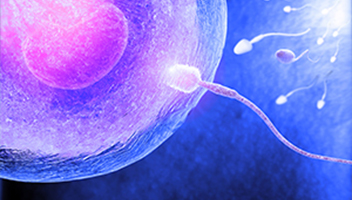
    A set of intricate treatments known as in vitro fertilization (IVF) are used to help with fertility, prevent genetic issues, and aid in child conception. IVF involves removing mature eggs from the ovaries and fertilizing them in a laboratory with sperm. After that, the fertilized embryos are transferred into the uterus. IVF cycles are completed in roughly three weeks. When these processes are divided into separate steps, the process can sometimes take longer. IVF is the most successful type of assisted reproductive technology . The process is possible with the use of the couple’s own sperm and eggs. Or, IVF may use donor sperms or eggs. A gestational carrier, a woman who has had an embryo implanted in her uterus, may occasionally be employed.

    7. What are the services that you provide?

    At ReproArt Fertility, we offer the following services: (hyperlink to service page)

    • IVF
    • IUI
    • ICSI
    • Donor Services
    • Blastocyst
    • Laser hatching
    • Fertility preservation
    • Laparoscopy and Hysteroscopy
    8. What does freezing of the eggs mean?

    Egg freezing, sometimes referred to as mature oocyte cryopreservation, is a technique used to preserve women’s future fertility. If you want to make sure you can get pregnant later but aren’t ready to get pregnant right away, egg freezing can be a possibility. Because the eggs aren’t fertilized before being frozen, unlike with fertilized egg freezing (embryo cryopreservation), egg freezing doesn’t need sperm. This is the procedure of choice for many young cancer patients as well as a part of social egg freezing.

    9. What is the success rate of IVF?

    In-vitro fertilization (IVF) success rates for women under 35 who are able to conceive on the first attempt (i.e., the first egg retrieval) are 55% on average nationwide.

    10. What is Intrauterine Insemination?

    The artificial insemination technique known as intrauterine insemination (IUI) is used to treat infertility. When your ovary releases one or more eggs for fertilization, concentrated and cleaned sperm are immediately injected into your uterus. The intended result of intrauterine insemination is that the sperm has to travel a lesser distance to reach the fallopian tube and fertilize an egg that is already mature in order to produce a pregnancy. Depending on the underlying causes of infertility, IUI can be timed to coincide with your regular natural cycle or your doctor can use some fertility drugs.

    11. How to get pregnant with PCOS?

    PCOS does not prevent pregnancy. You’ll probably need to maintain a healthy weight, regulate your blood sugar levels, and manage other PCOS symptoms with medicine and a healthy lifestyle. In some circumstances, fertility drugs by themselves will aid in conception in PCOS patients. If that fails, you might require IVF treatment.

    12. What is Endometriosis?

    Endometriosis is a progressive condition in which the endometrium, the tissue that normally lines the interior of your uterus, grows outside your uterus. The tissue lining your pelvis, fallopian tubes, and ovaries are all frequently affected by endometriosis. Rarely, tissue resembling endometrium may be seen outside the region around the pelvic organs.
    Endometrium-like tissue that has endometriosis behaves like endometrial tissue would: it swells, degrades, and bleeds with each menstrual cycle. Endometriosis is a painful condition- including painful periods and painful intercourse. Impaired fertility is the main problem of endometriosis. Between one-third to half of endometriosis sufferers struggle to conceive. Endometriosis sufferers are occasionally advised by doctors to immediately start planning a family because the condition could get worse over time.
    Endometriosis in the ovaries can lead to the formation of chocolate cysts which often affects the quality of eggs in the ovary and can affect egg formation.

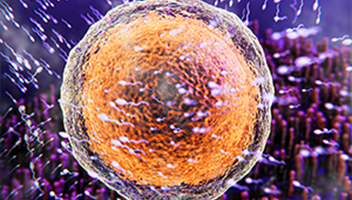
    13. What is Intracytoplasmic Sperm Injection?

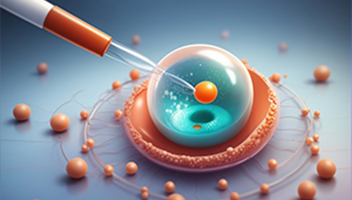
    Intracytoplasmic sperm injection (ICSI) is a technique used during in vitro fertilization (IVF) where a single sperm is injected directly into the egg for the purpose of fertilization.
    The semen sample is prepared by centrifuging or spinning the sperm cells through a special medium. This separates live sperms from debris and most of the dead sperms. The embryologist then picks up the single live sperm in a glass needle and injects it directly into the egg.

    14. What is the cost of IVF?

    The cost of the treatment varies depending on a lot of different factors. Your treatment plan, complications and cases would determine the overall cost. The three main areas which involves the costs of IVF includes:

    • The procedure of IVF including egg pickup, egg fertilization, embryo formation and culture followed by embryo transfer
    • Ovarian stimulation injections
    • Investigations- both before and during IVF procedures
    15. What are the IVF Risks?

    Generally speaking, fertility treatments are quite safe, although all medical procedures have a small chance of having unintended effects. Reactions to the hormonal fertility medicines taken during the preparation for egg retrieval may be one of the negative effects of IVF. One of the most important complications of IVF is OHSS or ovarian hyperstimulation syndrome. However with recent advances and mild stimulation protocols nowadays, clinic are moving towards OHSS free clinics. Additionally, there is a slight possibility of uncommon difficulties during the egg harvesting and embryo transfer processes.
    Any treatment you receive will be as safe as possible thanks to the collaboration between you and your fertility specialist. If you have any questions, especially if you’re having any side effects, you need to consult with your doctor.

    16. What are ejaculation disorders and how are they treated?

    The inability of a man to effectively ejaculate semen from the penis at the time of sexual climax is known as ejaculatory dysfunction. Male infertility is frequently brought on by ejaculatory dysfunction, which is the most common type of male sexual dysfunction. Premature ejaculation, delayed ejaculation, retrograde ejaculation, and anejaculation (no ejaculation) are the four kinds of ejaculatory dysfunction.
    Medication, behavioural therapy (for premature ejaculation), and occasionally surgery are among forms of treatment for ejaculatory dysfunction. Retrograde ejaculation can be avoided with assisted reproductive technologies, such as intrauterine insemination (a type of artificial insemination) or ICSI- intracytoplasmic sperm injection. This may entail having the male sperm removed from his body and placed in the female’s uterus or injecting it right into an egg in the female’s ovary (intracytoplasmic sperm injection).

    17. What are Uterine Fibroids?

    Non Cancerous uterine growths known as uterine fibroids are common during the childbearing years. Uterine fibroids, also known as leiomyomas, don’t raise the risk of uterine cancer. Fibroids can primarily be categorized according to their location in the uterine wall:

    • Intramural fibroids develop inside the uterine wall’s musculature.
    • The uterine cavity is protruded into by submucosal fibroids.
    • Subserosal fibroids protrude from the uterus’s wall. Uterine fibroids can develop slowly, quickly, or stay the same size. Their growth patterns are variable. Usually, fibroids don’t prevent women from becoming pregnant. But it’s possible that fibroids, particularly submucosal ones, could lead to infertility or miscarriage. The risk of specific pregnancy problems, such as separation of the placenta, low birth weight babies, and premature delivery, may also increase with fibroids.
    18. What do you mean by low AMH?

    Low AMH levels indicate low ovarian reserve in females (egg supply). This lowers the fertility potential of the woman and can increase the time required to achieve pregnancy. However it does not rule out the possibility of conceiving naturally though the possibilities of having a successful pregnancy will be lower than another woman of the same age with higher AMH. There are, sadly, no effective techniques to raise your AMH levels. Having said that, you can always choose IVF to conceive a child.

    19. Can you get pregnant with blocked tubes?

    Since there are two ovaries, even if one fallopian tube is obstructed, a pregnancy can still occur since the egg can pass via the opposite side of the body. However, it won’t be feasible to become pregnant naturally if both tubes are totally closed. IVF is the go to solution for such patients since it bypasses the fallopian tubes.

    20. What do you mean by congenital anomalies of the uterus?

    Congenital uterine abnormalities are uterine deformities that emerge during embryonic development and are inborn in the female child. Less than 5% of women have congenital uterine anomalies, but up to 25% of women who have miscarried or delivered prematurely have been found to have them. Some uterine abnormalities like uterine septum can be surgically treated while others like unicornuate uterus do not have any effective treatment.

    Scroll to Top