
Can Hormonal Imbalance Make Ovulation Hard to Track?
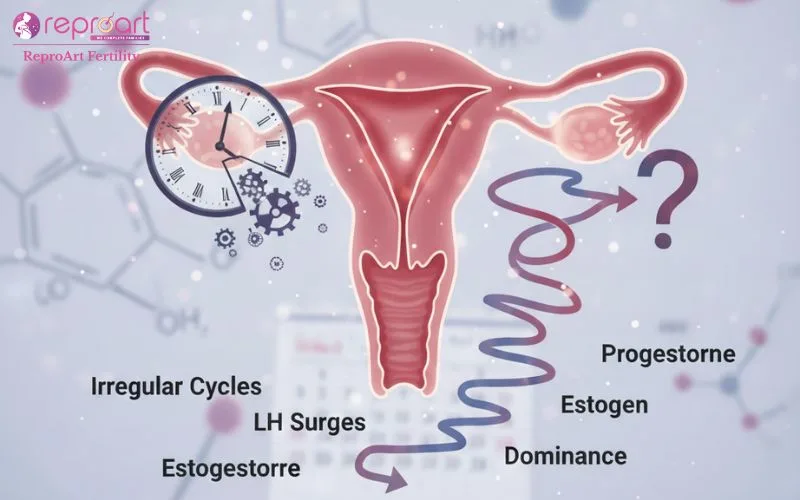
Table of Contents
#How Hormonal Imbalance Makes Ovulation Hard to Track
#Common Causes of Hormonal Imbalance Affecting Ovulation
#Symptoms You May Notice (Often Overlooked)
# How Doctors Diagnose Hormonal Imbalance
#How Hormonal Imbalance Affects Fertility
#Natural Ways to Support Hormone Balance
#Medical Treatments That Help Regulate Ovulation
#Mistakes to Avoid When Trying to Track Ovulation
#Why Choose ReproArt Fertility for Hormonal & Ovulation-Related Treatment?
Many women dream of becoming mothers. For some, that dream comes easily. For others, it feels like a long journey full of confusion, doubt, and silent questions. One of the most common worries is this: “Why can’t I track my ovulation properly?”
If you feel lost or frustrated because your cycle behaves differently every month, you are not alone. Hormonal imbalance is one of the biggest reasons behind unpredictable ovulation. When hormones shift, even by a small amount, the entire cycle can get disturbed.
This blog will help you understand everything in simple language. What is ovulation? What does a hormonal imbalance mean? How are both connected? How can you recognise the signs? What mistakes to avoid? And how expert fertility care can bring you back on track.
What is Ovulation?
Ovulation is the most important part of a woman’s monthly cycle. It is the moment when an egg is released from the ovary. Here is what happens:
- Every cycle, your ovaries prepare several tiny eggs.
- Only one egg usually grows fully.
- Around the middle of the cycle, this egg is released from the ovary.
- This release is called ovulation.
- This egg can get fertilised within the next 12–24 hours.
If sperm meets the egg during this time, pregnancy can begin. If it doesn’t, the egg breaks down, and the next period starts.
In a healthy cycle of 28 days, ovulation usually happens around Day 14. But every woman is different. Some ovulate early. Some ovulate late. And some don’t ovulate regularly at all.
What is Hormonal Imbalance?
Hormones are chemical messengers. The various hormones involved in the woman's reproductive cycle control every aspect of the hormonal system that triggers ovulation.
They include:
- FSH (Follicle-stimulating hormone) stimulates the growth of follicles.
- LH (Luteinizing hormone) causes ovulation.
- Estrogen is produced in response to LH to prepare the uterine lining (endometrium) for the embryo.
- Progesterone is produced after ovulation and helps sustain the pregnancy until birth.
- Prolactin should stay low for normal ovulation.
- Thyroid hormones maintain overall balance.
If any one of these hormones becomes too high or too low, your cycle can act differently.
Ovulation can be delayed. There could be irregular ovulation causes. Even ovulation could be absent. Hormonal imbalance is surprisingly common. According to global data:
- 1 in 6 couples struggle with fertility issues.
- 40% of women with irregular periods have ovulation-related problems.
- PCOS affects nearly 10–15% of women of reproductive age.
- Thyroid disorders affect about 1 in 8 women during their lifetime.
These numbers show how important hormonal balance is.
How Hormonal Imbalance Makes Ovulation Hard to Track
Hormonal imbalance affects ovulation in many ways. Let us understand each one clearly:
1. Cycles Become Irregular
You may get your period early one month and very late the next. This factor makes it nearly impossible to predict when ovulation will occur.
2. Ovulation May Not Happen Every Month
Women can also experience anovulatory cycles, which means they do not release an egg during the cycle.
3. Ovulation Signs Become Unclear
Women often keep track of ovulation with various physical signs, like:
- Changes in cervical mucus
- Ovarian pain
- Breast tenderness
- Slight increase in basal temperature
There can be ovulation difficulty due to hormones. When the hormones that control these physical signs fluctuate due to a hormonal imbalance, there may be no signs that an ovulatory cycle has occurred.
4. LH Surge Becomes Unpredictable
Another type of hormonal pattern that many women (and fertility experts) depend on to track the ovulation cycle is the LH surge.
Many ovulation kits measure the LH hormone in the urine. When hormonal patterns fluctuate too greatly, there will be false positive results and/or no positive results from LH kits, leading to confusion about ovulation.
5. Stress Hormones Disturb the Cycle
Cortisol, the stress hormone, can delay or prevent ovulation if it stays high.
6. Weight Gain or Loss Affects Hormone Levels
Fat cells produce estrogen.
Too much or too little body fat can disturb the delicate balance.
Common Causes of Hormonal Imbalance Affecting Ovulation
Many conditions can disturb hormone levels. Some are medical, some lifestyle-related.
1. PCOS (Polycystic Ovary Syndrome)
This is one of the most common causes. PCOS creates high male hormones, irregular periods, and delayed ovulation.
2. Thyroid Disorders
Both hypothyroidism (low thyroid) and hyperthyroidism (high thyroid) disturb ovulation.
3. High Prolactin Levels
Prolactin is the hormone that helps in breastfeeding. If it rises abnormally, it blocks ovulation.
4. Stress and Anxiety
Long-standing stress affects the brain’s control over hormones.
5. Obesity or Very Low Weight
Both conditions change estrogen and insulin levels.
6. Insulin Resistance
Often linked with PCOS, it affects how the ovaries work.
7. Perimenopause
Hormones naturally fluctuate as women approach their 40s.
8. Certain Medicines
Steroids, psychiatric medicines, and some birth-control pills can affect ovulation.
Symptoms You May Notice (Often Overlooked)
Women often ignore early signs. But these little signals speak loudly:
- ● Cycles shorter than 21 days or longer than 35 days
- ● Very light or very heavy bleeding
- ● Painful acne
- ● Unwanted facial hair
- ● Sudden weight changes
- ● Hair thinning
- ● Breast discharge
- ● Mood changes
- ● Constant fatigue
These symptoms indicate that hormones might not be in balance.
How Doctors Diagnose Hormonal Imbalance
A fertility expert can use several different testing methods to help determine the specific issue(s) a woman is facing with ovulation issues. Commonly used tests include:
- Women who take a combination of folic acid, Vitamin D, omega-3, and antioxidants conceive 28% faster than women without supplements.
- Antioxidants taken by men improve sperm quality by 125% in 3–4 months.
- In women with PCOS, Myo-Inositol improves ovulation by 55–65%.
- Studies show that higher-quality embryos are produced with the use of CoQ10 supplements by couples preparing for IVF.
Supplements do not replace medical treatment. But they prepare the body, strengthen reproductive health, and boost success rates.
Important Things to Know Before Starting Supplements
You need to note a few points before starting supplements:
- Blood Tests: FSH, LH, Estrogen, Progesterone, AMH, Prolactin, Thyroid Hormone
- Ultrasound: To examine ovarian size, egg development, and the presence of polycystic ovary syndrome.
- Ovulation Tracking: To monitor the growth of follicles via ultrasounds/scans.
- Pelvic Exam: To find any other reasons for ovulation problems.
Once the cause of the ovulation problem is found, it is easier to treat and to be effective.
How Hormonal Imbalance Affects Fertility
When ovulation becomes unpredictable, timing intercourse becomes difficult. But that is not the only issue. Hormonal imbalance can also:
- Prevent the egg from maturing
- Affect egg quality
- Thicken or thin the uterine lining
- Disturb cervical mucus
- Delay implantation
- Increase the risk of early miscarriage risk
Research shows:
- 30–40% of fertility problems in women come from ovulation issues.
- Proper treatment allows nearly 70–85% of women to ovulate regularly again.
This gives hope. With the right guidance, most women recover ovulation and conceive naturally or with treatment.
Natural Ways to Support Hormone Balance
Medical treatment is important. But lifestyle changes help too.
1. Balanced Diet
More fruits, vegetables, whole grains, and proteins. Less sugar and deep-fried foods.
2. Regular Exercise
Even 30 minutes of walking helps reduce insulin resistance.
3. Adequate Sleep
Hormone repair happens at night. 7–8 hours is ideal.
4. Stress Management
Breathing exercises, yoga, and simple activities are recommended for stress relief for PCOS.
5. Healthy Weight Management
Losing even 5% of body weight will help improve ovulation in women with PCOS.
6. Avoid Alcohol and Tobacco
Both of these substances significantly impact estrogen and progesterone levels.
Medical Treatments That Help Regulate Ovulation
Depending on the cause, a doctor may recommend:
- Medications for the induction of ovulation (including Clomiphene and Letrozole).
- Thyroid medication
- Metformin (for insulin resistance)
- Low-dose hormonal therapy
- Vitamin D and mineral supplements
- Injectable hormones
- Failure of natural methods leading to IUI or IVF
Mistakes to Avoid When Trying to Track Ovulation
Many women make mistakes that delay pregnancy unconsciously.
1. Relying Only on Mobile Apps
Apps predict based on average data. Your body may be different.
2. Using Ovulation Kits Incorrectly
Testing too early or too late gives wrong results.
3. Checking Only One Sign
Relying only on mucus or only on temperature can mislead you.
4. Ignoring Stress Levels
Mental stress has a direct effect on hormonal signals.
5. Skipping Medical Advice
If your cycles have been irregular for more than 3 months, you must consult a specialist.
6. Not Testing for Thyroid or Prolactin
These hormones affect ovulation more than women realise.
Why Choose ReproArt Fertility for Hormonal & Ovulation-Related Treatment?
At ReproArt Fertility, we believe every woman deserves personalised care based on science. We know how confusing a hormonal imbalance can feel. Our specialists follow a structured approach that combines compassion with advanced fertility technology. Here's what makes us different:
1. Expert Diagnosis Through Advanced Monitoring
We use transvaginal ultrasound, hormone profiling, and cycle mapping to understand your ovulation pattern with precision.
2. Specialised IUI Treatment for Mild Hormonal Problems
Our IUI program supports couples when ovulation is irregular, but the ovaries still respond well. Precise timing at the optimal moment of fertility can be critical, and our observance allows for insemination to occur at that perfect time.
3. Complex Hormonal Disorders Need Comprehensive Therapeutic Assistance
IVF allows complete control of the menstrual cycle in cases where imbalances of ovarian hormones affect egg quality, growth of follicles, and the development of the lining of the uterus, endometrium. We prepare individual stimulation protocols for those who have been diagnosed with PCOS, thyroid disorders, low AMH levels, or high prolactin levels.
4. Treatment of Male-factor Infertility and Severe Ovulatory Problems by ICSI (Intracytoplasmic Sperm Injection)
ICSI allows the sperm of a single healthy male to be injected directly into the egg and avoids many of the complications associated with hormone therapy. ICSI improves fertilisation rates with egg/sperm.
5. Compassionate, Patient-Centred Approach to Care
We treat every patient as a unique individual. Every step is designed keeping in mind your medical background and emotional comfort.
6. Full Transparency and Ongoing Support
We are here for you through every step, from consultation to successful pregnancy test, and to guide you through all the emotional ups and downs that come as part of this journey.
7. High Success Rates With Modern Lab Technology
Our embryology laboratory follows international standards, increasing implantation rates and reducing cycle failures.
8. Holistic Approach to Achieving Complete Fertility Wellness
ReproArt Fertility will provide education on nutrition, emotional well-being, and individualised follow-up with the aim of helping you achieve the best result for you and your hormones to settle on their own.
ReproArt Fertility will be more than a clinic. As the best IVF clinic in Delhi, it will be where hope develops and means something real.
Your Journey Can Begin Today
Hormonal imbalance may make ovulation confusing. It may shake your confidence. But it does not take away your chance of becoming a mother. With the right diagnosis and the right fertility team, your body can return to balance.
If irregular cycles, unpredictable ovulation, thyroid issues, or PCOS have been troubling you, do not wait. A timely step today can completely change tomorrow.
Book your consultation with ReproArt Fertility and take the first step toward your pregnancy journey. Your dream deserves expert hands and a caring heart.
Frequently Asked Questions
Q1. Can a hormonal imbalance completely stop ovulation?
A. Yes. Hormonal imbalances such as FSH, LH, thyroid or Prolactin may affect ovulation in some cycles. Those hormonal disturbances are a common part of PCOS, thyroid disease and high prolactin levels.
Q2. Can I track ovulation at home if my hormones are unstable?
A. Various techniques of ovulation detection include ovulation kits, checking cervical mucus, and basal body temperature, but all these methods are quite inconsistent. Medical monitoring is more accurate.
Q3. Is a hormonal imbalance permanent?
A. Not usually. With treatment, lifestyle modifications, and proper diagnosis and treatment of any underlying medical conditions, the majority of women will achieve hormonal equilibrium within a few months.
Q4. Does irregular ovulation mean I can never get pregnant?
A. No. Even when women experience irregular cycles of ovulation, they can become pregnant naturally or through assisted reproductive technologies, including but not limited to IUI and IVF.
Q5. Can stress alone cause ovulation problems?
A. Yes. Stress may lead to increased cortisol levels and interfere with the brain's ability to communicate with the ovaries, therefore hindering one's ability to ovulate.
Q6. Will weight loss improve my ovulation?
A. If you are overweight, even 5% weight loss can improve ovulation in PCOS cases.
Q7. How does thyroid affect fertility?
A. Thyroid hormones control metabolism and reproductive hormones. Both low and high thyroid levels can delay ovulation.
Q8. When should I see a fertility specialist?
A. Consult a fertility specialist if you have been trying to get pregnant for 6-12 months unsuccessfully. Or if you have had irregular menstrual cycles for more than 3-4 months.


