
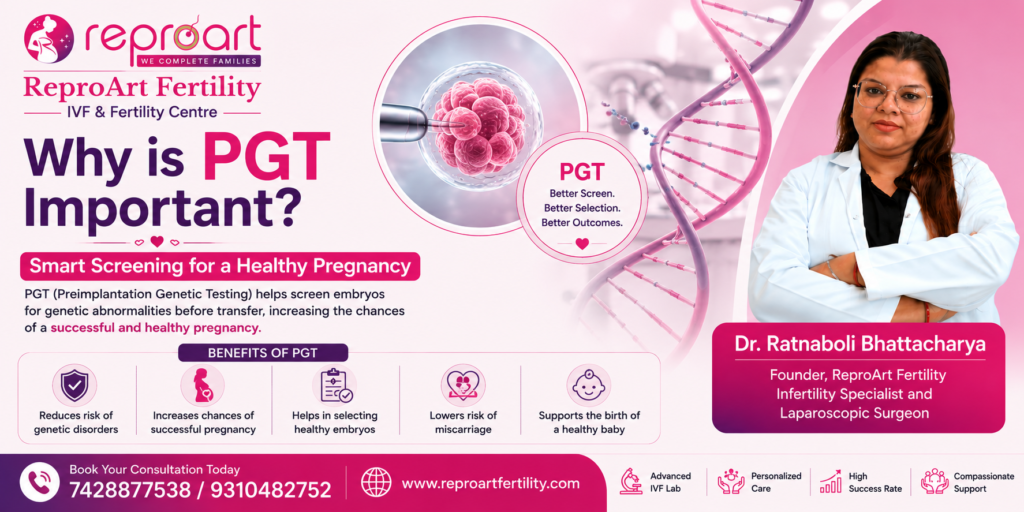
If you’ve been on the IVF journey for any length of time, you already know it’s not just a medical process. Every decision feels heavy, and with every step, you carry the weight of hope. That’s exactly why more and more fertility specialists, including the best IVF Specialist in Noida, are turning to Preimplantation Genetic Testing (PGT) as one of the smartest tools available to improve the odds of a healthy pregnancy.
But what exactly is PGT, why does it matter, and is it right for you? Let’s break it down in a way that actually makes sense.
The Moment Before the Transfer — and Why It’s Everything
For intended parents who have turned to in vitro fertilization (IVF) to start or grow their family, the embryo transfer is the long-awaited, hope-filled moment that the entire journey has been building towards. But here’s something many people don’t realise until they’re deep into the process: not all embryos are created equal.
An embryo can look perfect under a microscope, featuring the right shape and size, develop exactly on schedule. However, it can still carry chromosomal abnormalities that are completely invisible to the normal eye. These abnormalities are one of the leading reasons IVF cycles fail and why miscarriages happen. A skilled female IVF specialist in Noida understands why PGT has become an essential part of advanced fertility care, enhancing the meticulous and intelligent steps in the journey.
Before the embryo transfer, PGT allows your fertility doctor to screen your viable embryos for genetic and chromosomal issues — giving you the best possible shot at a successful, healthy pregnancy right from the start.
What is Preimplantation Genetic Testing (PGT)?
Think of PGT as a “health check” for your embryos—done before they reach the uterus. During your IVF cycle, once the embryos reach the blastocyst stage (around day 5 or 6), a few cells are biopsied and sent to a genetics lab for analysis. A healthy embryo has 46 chromosomes; deviations can prevent implantation, cause pregnancy loss, or lead to health issues. PGT determines which embryos have the correct chromosomal count, aiding informed transfer decisions.
There are three types of PGT, each serving a specific purpose:
- PGT-A — screens for chromosomal abnormalities like trisomy (an extra chromosome, as in Down syndrome) or monosomy (a missing chromosome)
- PGT-M — screens for specific single-gene disorders, such as cystic fibrosis, sickle cell anaemia, or other inherited conditions
- PGT-SR — screens for structural chromosomal rearrangements that could lead to implantation failure or miscarriage
It Takes the Guesswork Out of Embryo Selection
PGT adds a genetic layer to the assessment. When you work with a knowledgeable IVF female specialist in Noida, she will use PGT results alongside her clinical expertise to identify the embryo most likely to give you a successful pregnancy.
It Meaningfully Improves IVF Success Rates
By prioritising the transfer of chromosomally healthy embryos, PGT can significantly increase the likelihood of successful implantation. For couples who’ve already been through one or more failed IVF cycles, this can be the turning point. Selecting genetically sound embryos means they are far more likely to implant and develop into a healthy baby.
It Reduces the Risk of Miscarriage
Chromosomal abnormalities are one of the most common causes of pregnancy loss, and one of the most devastating parts of the fertility journey. PGT helps identify and set aside embryos that carry these abnormalities, lowering the risk of miscarriage and giving couples genuine, evidence-backed reassurance going into the transfer.
It’s a Game-Changer for Women Over 35
As women age, the chance of chromosomal abnormalities in embryos naturally increases. For women over 35, and especially over 37, PGT-A significantly improves pregnancy outcomes by identifying embryos with the healthiest genetic profile. This is why an IVF female specialist in Noida often recommends PGT-A for patients in this age group.
It Protects Future Generations
If you or your partner carries a known hereditary condition, screening with PGT-M prevents transmission of that specific disorder before transfer. It means your child won’t inherit a condition that affected your family. It’s about making an informed, loving choice for the child you’re hoping to bring into the world, not designing a “perfect” baby.
It Saves Time, Heartbreak, and Cost in the Long Run
Nobody wants to go through cycle after cycle of transfers that don’t work. While PGT adds an additional step and cost to the IVF process, it helps avoid the far greater emotional and financial burden of failed transfers. Better information upfront means smarter decisions to achieve a successful and healthy pregnancy.
Who Should Be Talking to Their Doctor About PGT?
PGT isn’t a one-size-fits-all recommendation, but it’s absolutely worth discussing with your fertility specialist if you:
- Are 35 years of age or older
- Have experienced recurrent miscarriages
- Have gone through multiple failed IVF cycles
- Have a known family history of a genetic disorder
- Have a partner who carries a chromosomal abnormality
An IVF female specialist in Noida with experience in PGT will take the time to understand your complete medical condition before advising PGT. Because what works for one patient may not be what’s needed for another.
Understanding the Limitations of PGT
PGT is a highly advanced and accurate procedure — but it’s important to approach it with realistic expectations. Even a chromosomally normal embryo carries a small degree of uncertainty, as do all biological processes. What PGT does is give you and your doctor the clearest possible picture before making one of the most important decisions of your journey.
Taking the Next Step Towards a Healthier Pregnancy
The IVF journey is one of the most personal roads a person can walk. It asks a lot — physically, emotionally, and financially. Tools like PGT exist to make that road a little less uncertain, a little more informed, and ultimately, a little more hopeful.
If you’re exploring IVF or are already in the middle of it, PGT is a conversation worth having. Connect with a trusted IVF Expert in Noida to understand whether this smart screening option is the right fit for your path to parenthood — because you deserve every possible advantage on this journey.